2026-10-08 · Mark Harrison
What Furnace Repair Typically Costs in Central Ohio
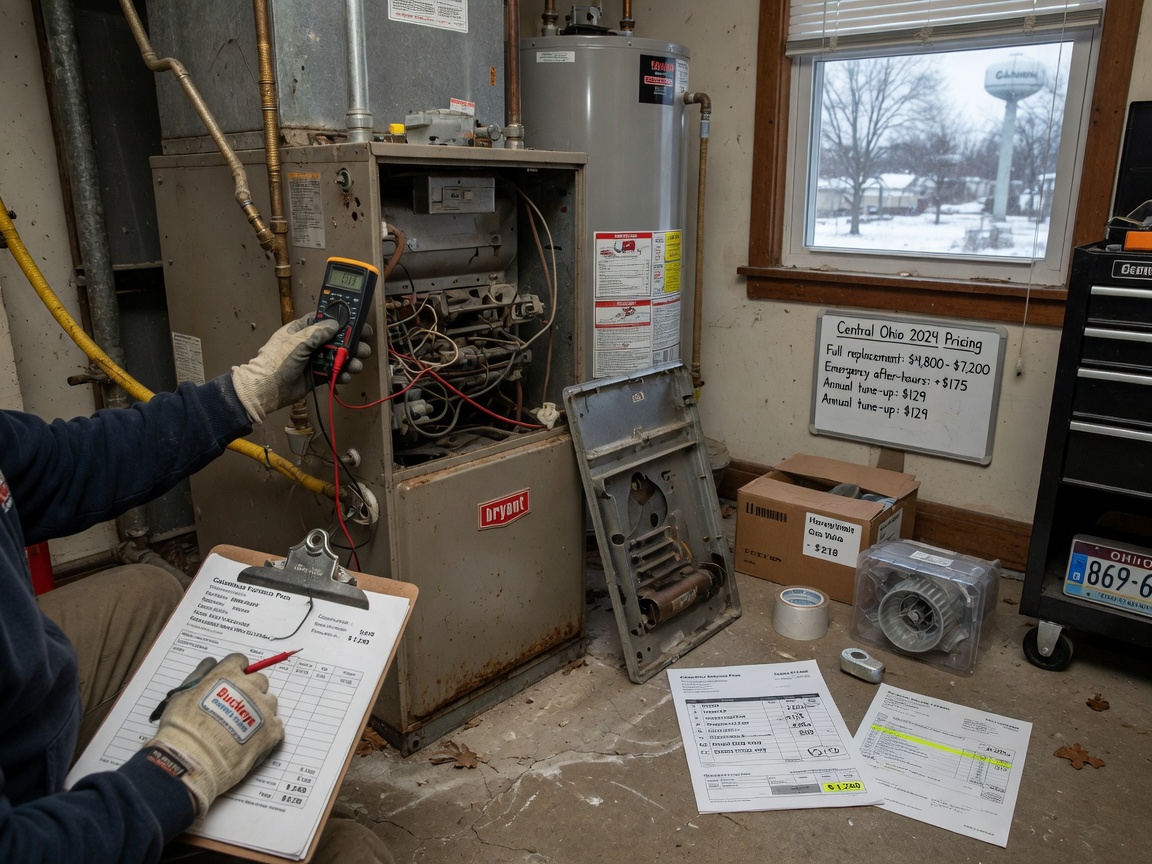
In Central Ohio, furnace repair costs generally fall between $150 and $1,500, depending on the complexity of the issue and the parts required. Minor repairs, such as flame sensor cleaning or thermostat adjustments, often land on the lower end, around $150–$350. More significant problems, like replacing a blower motor or control board, can push costs into the $400–$800 range. The most extensive repairs, such as a heat exchanger replacement, can easily exceed $1,000, sometimes reaching $1,500 or more, especially in older homes across cities like Columbus or Newark where original parts might be harder to source or the system is nearing its end-of-life. These figures are based on our extensive experience serving the diverse housing stock throughout the Across Ohio area, from the historic homes in German Village to the newer developments around Dublin and Westerville.
Common Furnace Problems and Their Costs
Understanding the typical costs associated with specific furnace problems can help you budget and make informed decisions. Many issues are relatively straightforward, especially if caught early. For instance, a common call we get during the colder months, when temperatures frequently dip below freezing, is for a furnace that isn't producing heat. Often, this can be due to a faulty igniter or a clogged flame sensor. Replacing a furnace igniter usually costs between $200 and $400, including labor. If your furnace is experiencing issues with its pilot light, which is common in older gas furnace models still found throughout the region, addressing furnace pilot light problems might involve cleaning or replacing the thermocouple, a repair that typically runs $150–$300. These costs reflect the time it takes for a skilled technician to diagnose and rectify the issue, ensuring your home stays warm when the winter winds blow across the plains of Central Ohio.
Another frequent culprit for furnace malfunctions is the blower motor. If your furnace is running but not blowing air, or if you're experiencing weak airflow, the blower motor might be failing. A replacement blower motor can cost anywhere from $400 to $800, depending on the make and model of your furnace. This is a crucial component for distributing heat throughout your home, especially in larger residences common in areas like Marysville or Reynoldsburg. Similarly, issues with the furnace control board, which acts as the 'brain' of your system, can lead to erratic operation or complete shutdown. Replacing a control board typically costs $300–$700. These prices account for the part itself and the specialized labor required to install and calibrate it correctly, ensuring seamless operation for years to come. For more specific issues related to airflow, you can explore our page on furnace not blowing air.
Factors Influencing Furnace Repair Costs
Several key factors can influence the final price of your furnace repair in Central Ohio. The type of furnace plays a significant role; gas furnaces often have more complex components than electric models, which can sometimes lead to higher repair costs for specialized parts. The age of your unit is another critical factor. Older furnaces, especially those 15 years or more in service, may have discontinued parts that are harder to find, increasing both the cost and the time required for repair. Homes in established neighborhoods of cities like Springfield or Marion often feature these older systems. Furthermore, the severity and complexity of the problem directly impact labor time and parts needed. A simple adjustment will naturally cost less than a complete component overhaul.
Emergency service also comes with a premium. If your furnace breaks down on a frigid Saturday night in January, when temperatures can plummet well below freezing, you'll likely pay more for an after-hours call. While we offer flexible hours (Mon–Fri 8am–6pm, Sat 9am–2pm), urgent requests outside these times or on holidays will incur additional fees. The brand and model of your furnace can also affect part prices, as some manufacturers' components are more expensive or proprietary. Lastly, the warranty status of your furnace is important. If your unit or a recently replaced part is still under warranty, you might only be responsible for labor costs, significantly reducing your out-of-pocket expense. Always check your warranty documentation before authorizing any major repairs.
When to Consider Replacement Over Repair
There comes a point when repairing an old, ailing furnace becomes less economical than replacing it entirely. In Central Ohio, where furnaces work hard through long, cold winters, an average furnace lifespan is typically 15–20 years. If your furnace is approaching or has exceeded this age, and the repair cost is more than 50% of the cost of a new unit, it's often more prudent to invest in a replacement. For example, if a major component like the heat exchanger fails—a repair that can cost $1,000–$2,000 and is often a sign of an aging system—it might be time to consider a new, more efficient model. A cracked heat exchanger, for instance, is not only expensive to replace but can also pose safety risks, including carbon monoxide leaks.
Frequent breakdowns are another clear indicator. If you're calling for repairs every winter, the cumulative costs can quickly outweigh the investment in a new system. Modern furnaces are significantly more energy-efficient, offering substantial savings on your utility bills over time, which can help offset the initial replacement cost. This is particularly relevant in areas like Lima or Mansfield, where heating demands are high during the colder months. While the upfront cost of a new furnace might seem daunting, the long-term savings on energy and avoided repair bills, coupled with enhanced comfort and reliability, often make it the smarter financial decision. For homeowners experiencing issues like a furnace running constantly, a new, properly sized unit might be the ultimate solution.
Tips to Minimize Repair Costs and Prevent Breakdowns
Proactive maintenance is your best defense against unexpected furnace repair bills. Regular furnace tune-ups are crucial, ideally performed annually before the heating season kicks into full gear. During a tune-up, a technician can identify and address minor issues before they escalate into costly breakdowns. This includes cleaning components, checking electrical connections, and ensuring proper airflow. Changing your furnace filter regularly is another simple yet highly effective maintenance task. A dirty filter restricts airflow, forcing your furnace to work harder, which increases energy consumption and can lead to premature wear and tear on components like the blower motor. For older homes across Ohio, knowing how to replace a furnace filter in older Ohio homes is essential.